If your home is in a conservation area, you’ll already know that its character matters! These areas are protected because of their special architectural or historic interest, and traditional features such as sash windows often play a big part in that.
We work on period properties every day, so we know how important it is to find the right balance between improving how your windows perform and protecting the look of your home. If your sash windows are draughty, damaged, difficult to use or no longer working as they should, there are usually options available — but it’s worth understanding what may be possible before any work begins.
Why sash windows matter in conservation areas?
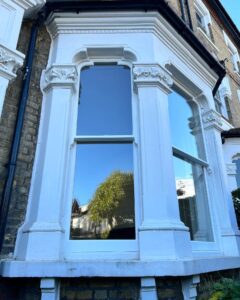
Sash windows are one of the most recognisable features of many period homes. Their proportions, glazing bars, timber profiles and traditional opening style all help create the overall look of the property.
In a conservation area, local councils will often pay close attention to changes that could affect the appearance of the street. This is particularly true for windows on the front of a property or any elevation that is clearly visible from the road.
That doesn’t mean your sash windows can’t be repaired, upgraded or improved. It simply means the work needs to be approached carefully and sympathetically.
Can you repair sash windows in a conservation area?
In our experience, repair is often the best place to start.
Original sash windows were designed to be maintained, and many issues can be resolved without replacing the whole window. Depending on the condition of the windows, this might include replacing sash cords, repairing sections of timber, easing and adjusting the sashes, replacing broken glass like-for-like, repainting, or improving how smoothly the windows open and close.
Where possible, repairing the existing windows helps preserve the character of the property while making them easier and more comfortable to live with.
What if your sash windows need replacing?
Sometimes a window is too far gone for repair to be the best long-term option. If that’s the case, replacement may be needed — but in a conservation area, the details really matter.
Replacement sash windows will usually need to closely match the originals. That means looking carefully at:
The overall style and proportions
The way the window opens
The glazing bar layout
Frame thickness and sightlines
The materials used
The finish and colour
How the window looks from the street
Timber is often expected, particularly on the front of period properties, because it gives the most authentic finish and helps preserve the traditional appearance of the building.
Do you need planning permission?
This depends on your property, the type of work being carried out and your local council’s requirements.
If your home is in a conservation area but is not listed, like-for-like repairs may often be possible without planning permission. However, councils can be stricter about changes to windows that are visible from the road, especially if the design, material or appearance is changing.
You may be more likely to need planning permission if:
You are changing the appearance of the windows
You are replacing original timber sash windows with a different material
Your property is affected by an Article 4 Direction
The windows are on a street-facing elevation
The proposed replacements do not closely match the originals
If your property is listed, Listed Building Consent is usually required for changes that affect its character.
We always recommend checking before committing to any work. If you’re unsure where to start, our Planning Guide for Period Windows explains the key points in more detail.
Why specialist advice matters
Sash window work in conservation areas is rarely just about replacing old windows with new ones. It’s about understanding the building, the surrounding area and the details that make the property special.
A sash window specialist can help you decide whether repair, draught-proofing, replacement sashes or full replacement is the most appropriate route. They can also help you understand which details are likely to matter most from a conservation point of view.
At Sliding Sash Solutions, we work with traditional sash windows every day, including homes in conservation areas and listed buildings. Our aim is always to help improve comfort, efficiency and usability while respecting the original character of the property.
Planning sash window work in a conservation area?
If you are thinking about repairing, draught-proofing or replacing sash windows in a conservation area, the best first step is to get advice before work begins.
Visit our Planning Guide for Period Windows here.
Or get in touch with our Sliding Sash Solutions experts to discuss the most suitable approach for your home.